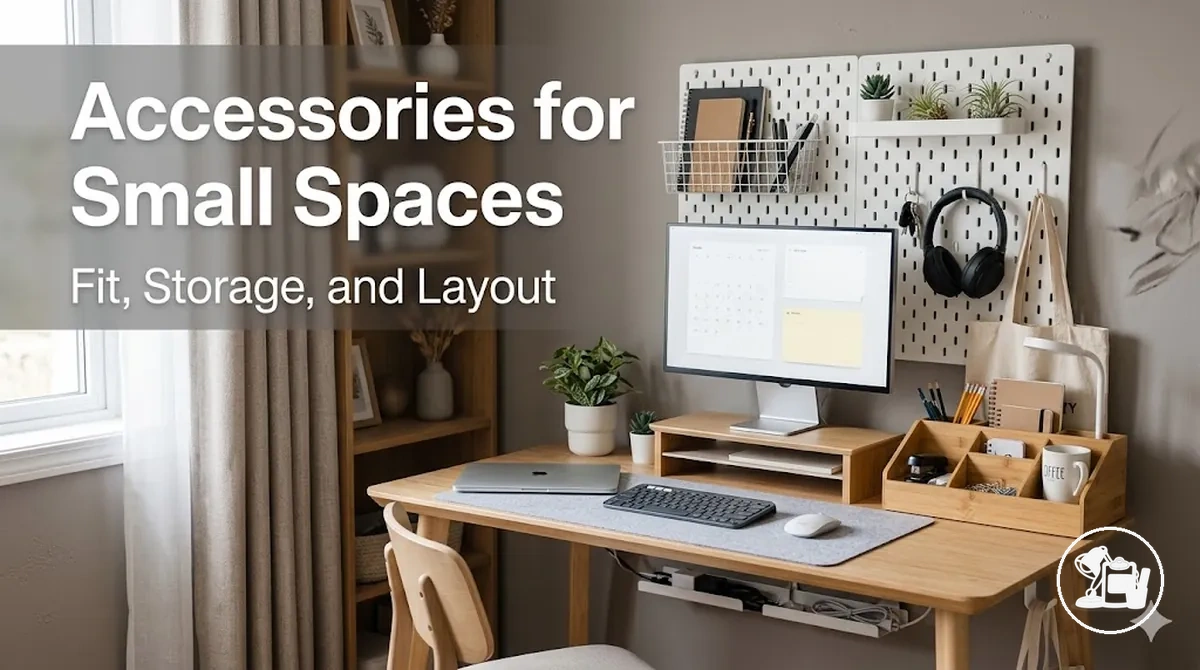
Study Desk Accessories for Small Spaces
Study desk accessories for small spaces are designed to optimize limited work areas by balancing fit, usable surface area, storage, and layout. These accessories should be evaluated according to available space, access needs, and workflow because compatibility often depends on desk dimensions and how the workspace is used. A compact setup typically works better when accessories support organization without reducing essential working space.
When selecting study desk accessories, desk footprint and available vertical space can influence which options are practical. Accessibility is also important, as frequently used items may be easier to manage when placed within reach, while less-used items can be stored to keep the main work area clear. Cable management choices may depend on desk shape, device placement, and outlet locations.
Lighting placement can affect how efficiently a small desk functions. Compact or adjustable lighting solutions may help preserve usable surface area while supporting reading, writing, or device use. Storage capacity, accessory footprint, and workflow should be considered together because improving one area can sometimes reduce available space in another.
For broader planning and related accessory categories, the study desk setup accessories hub provides additional context for building an organized and functional workspace.
Space Constraints and Desk Fit Considerations
Desk fit defines how study desk accessories align with a workspace’s physical limitations, including desk width, depth, height clearance, and surrounding area. Compatibility depends on the available surface area, chair movement, shelf clearance, outlet locations, and reach distance, which collectively determine functional efficiency without overcrowding.
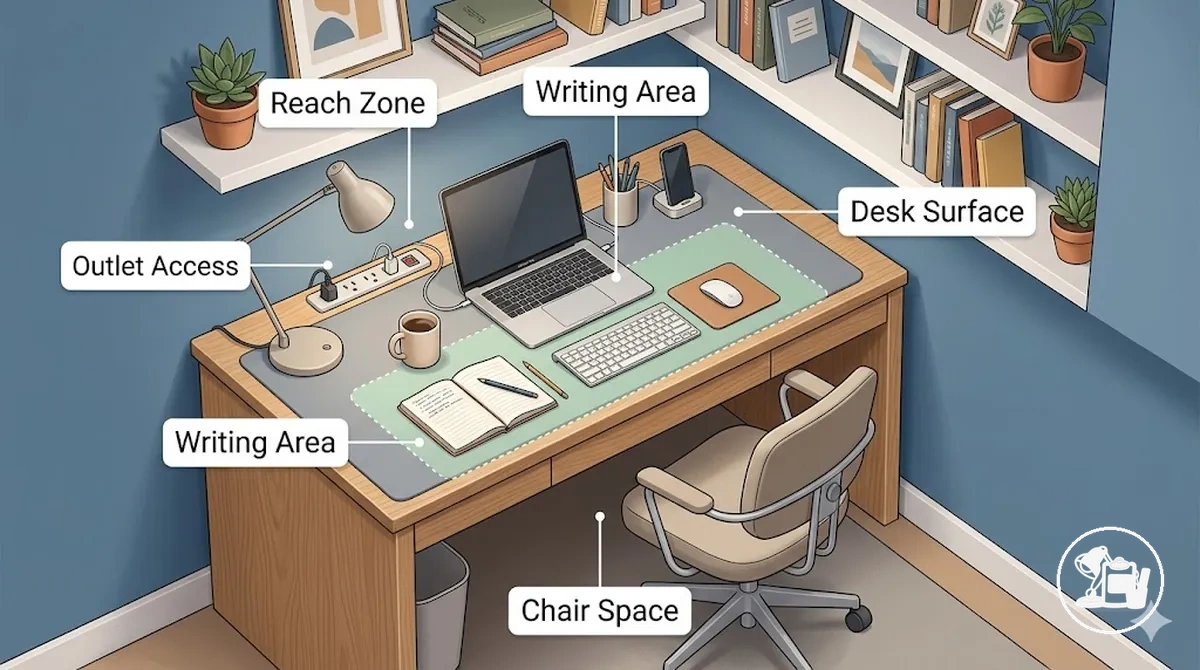
Evaluating desk fit involves considering the depth of the writing area to ensure sufficient room for tasks, while leaving space for storage solutions or trays. Vertical clearance above and below the desk should accommodate lighting, monitors, and under-desk organizers without hindering movement.
Other factors include outlet placement and reach zones for frequently used items. Positioning essential accessories within easy reach and storing secondary items in peripheral spaces can maintain workflow efficiency. Ensuring smooth chair mobility and access to shelving supports usability in compact study setups.
A checklist for practical desk fit includes desk surface depth, writing area clearance, vertical and under-desk space, chair movement, outlet access, and item reach distance, guiding optimal accessory placement while preserving functionality.
Organizing Desk Accessories Efficiently
Selecting organizer types depends on desk size, access frequency, and clutter management. On small desks, compatibility is guided by how each organizer's footprint, capacity, and ease of access balance against available surface area.
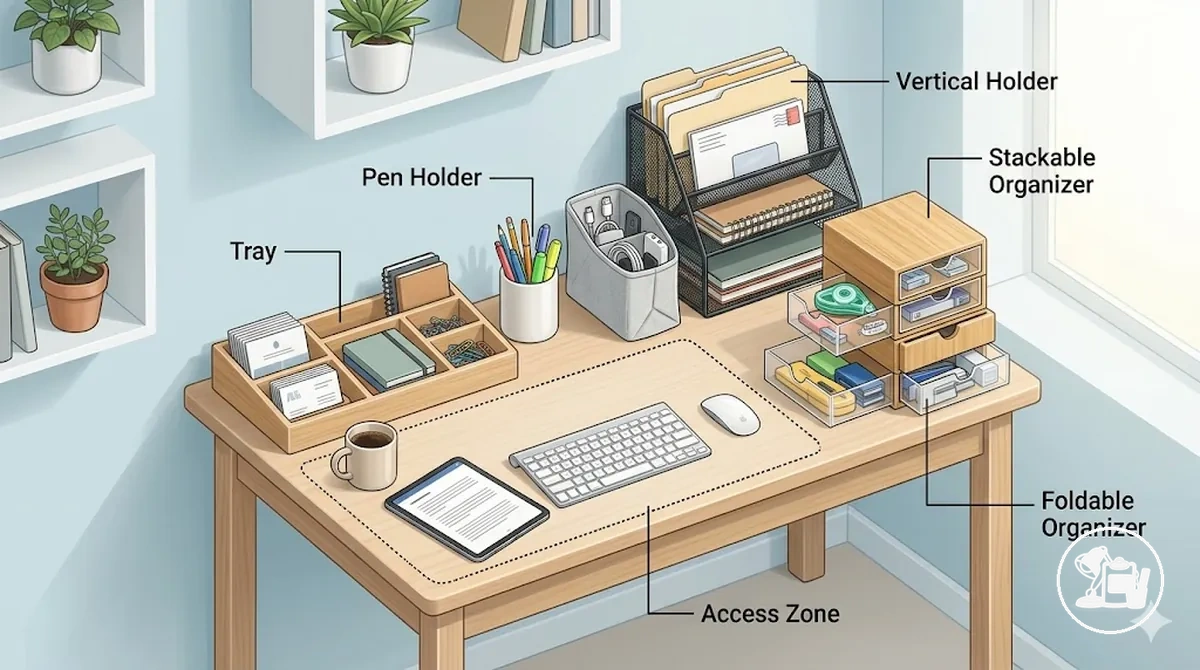
Trays, pen holders, vertical holders, stackable units, and foldable organizers each have distinct space and access characteristics. Trays offer open access but occupy more surface area, whereas vertical holders minimize footprint by using height. Stackable organizers increase storage in vertical space, and foldable units provide flexibility when storage needs vary.
| Organizer Type | Footprint | Capacity | Access Frequency | Clutter Risk |
|---|---|---|---|---|
| Tray | Moderate to high | Moderate | Frequent | Increases if overloaded |
| Pen Holder | Compact | Low | Frequent | Low |
| Vertical Holder | Minimal surface | Moderate | Occasional to frequent | Depends on organization |
| Stackable Organizer | Small footprint | High | Varies by layer | May rise if not sorted |
| Foldable Organizer | Variable | Variable | As needed | Usually low when stored |
Placement should prioritize frequently used items in easily accessible organizers, while less-used supplies can be stored in stackable or foldable units to maximize desk space. For additional insights on small-desk organization, consider how storage, access, and footprint interact to maintain a clutter-free workspace.
Storage Solutions and Multi-functional Organizers
Storage solutions fit small desks when vertical clearance, under-desk room, and item access frequency align with storage placement. Compact storage choices can create more usable workspace by relocating supplies away from the primary work area while keeping essential items accessible.
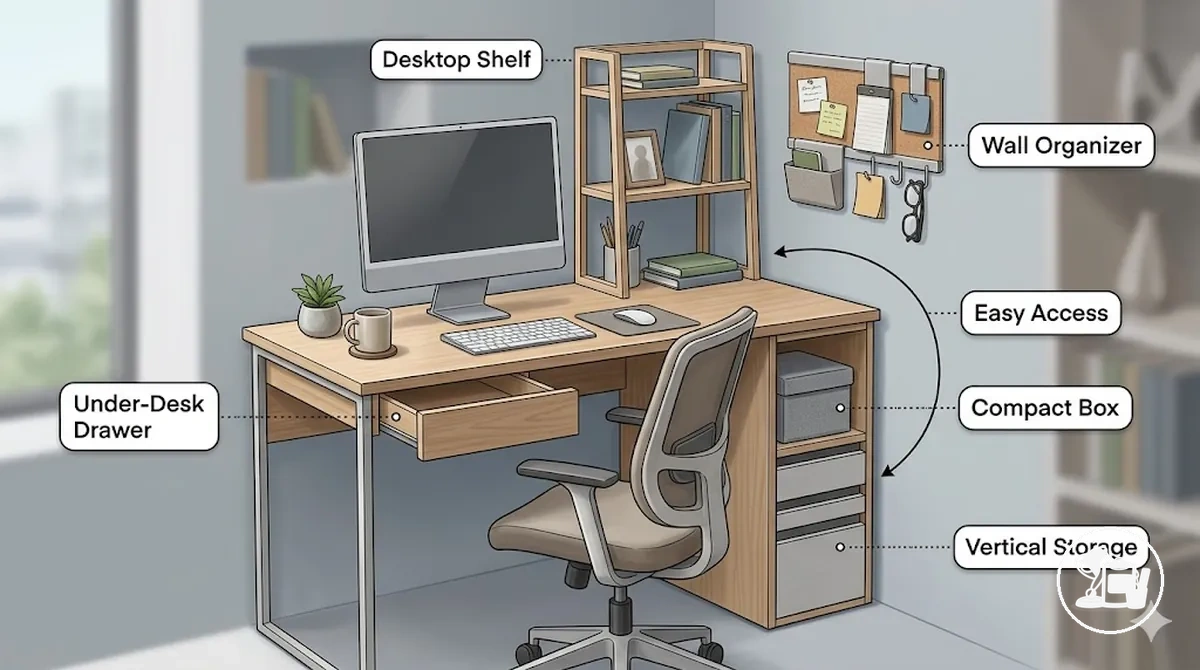
Desktop shelves can keep frequently used materials visible while using vertical space above the work surface. Under-desk drawers may store supplies below the desk, helping preserve surface area. Wall-mounted organizers can move storage away from the desk entirely when wall space is available. Vertical storage units can increase capacity in corners or along desk edges, while compact boxes can group related items for easier retrieval.
| Storage Solution | Primary Attribute | Placement | Access Pattern | Potential Effect |
|---|---|---|---|---|
| Desktop Shelves | Vertical use | Above surface | Frequent | May preserve workspace |
| Under-desk Drawers | Hidden storage | Below desk | Occasional | May reduce surface clutter |
| Wall-mounted Organizers | Off-desk storage | Wall area | Frequent | Can free desk space |
| Vertical Storage | Height utilization | Desk edge or corner | Varies | May increase capacity |
| Compact Boxes | Grouped storage | Desk or shelf | As needed | Can improve organization |
Storage effectiveness depends on balancing capacity with accessibility. Frequently used items are often easier to manage in visible storage, while less-used supplies may fit better in enclosed or lower-access locations. For broader planning around compact storage accessories, consider how placement choices influence both workspace availability and retrieval convenience.
Lighting Options for Compact Study Desks
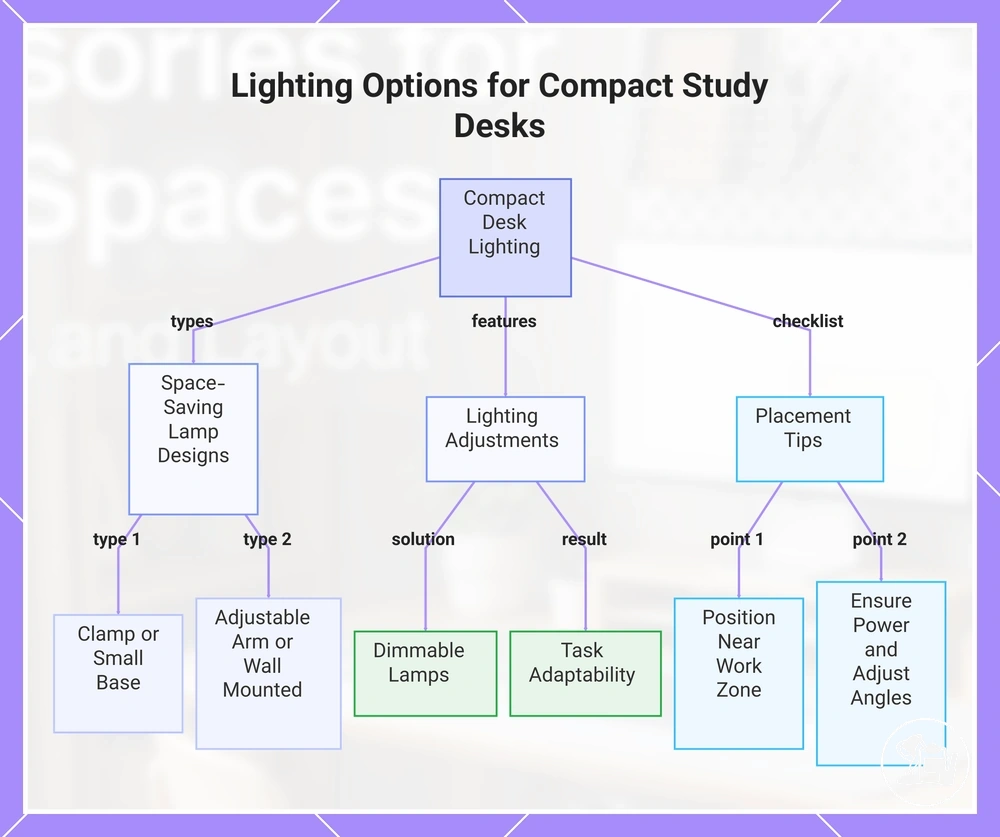
Lighting for compact study desks depends on desk depth, wall position, access to power outlets, and the primary writing area. Choosing lamps that occupy minimal surface area and reduce glare helps maintain an efficient and comfortable workspace.
Clamp lamps can be attached to desk edges or shelves to save surface space. Small-base lamps fit in narrow areas without crowding the desk. Adjustable arm lamps allow directing light onto specific tasks while minimizing shadows. Wall-mounted lighting can illuminate the desk without using desktop area. Brightness controls and dimmable lamps can help manage glare and adapt lighting to different tasks.
A mini-checklist for placement: position near the main work zone, avoid obstructing materials, ensure power access, and adjust angles to reduce shadows and reflections. Lamps with flexible positioning often provide the most adaptable solution for small workspaces.
This chart shows space-saving lamp types, lighting adjustments, and placement tips for compact study desks.
Cable Management and Tidy Wiring
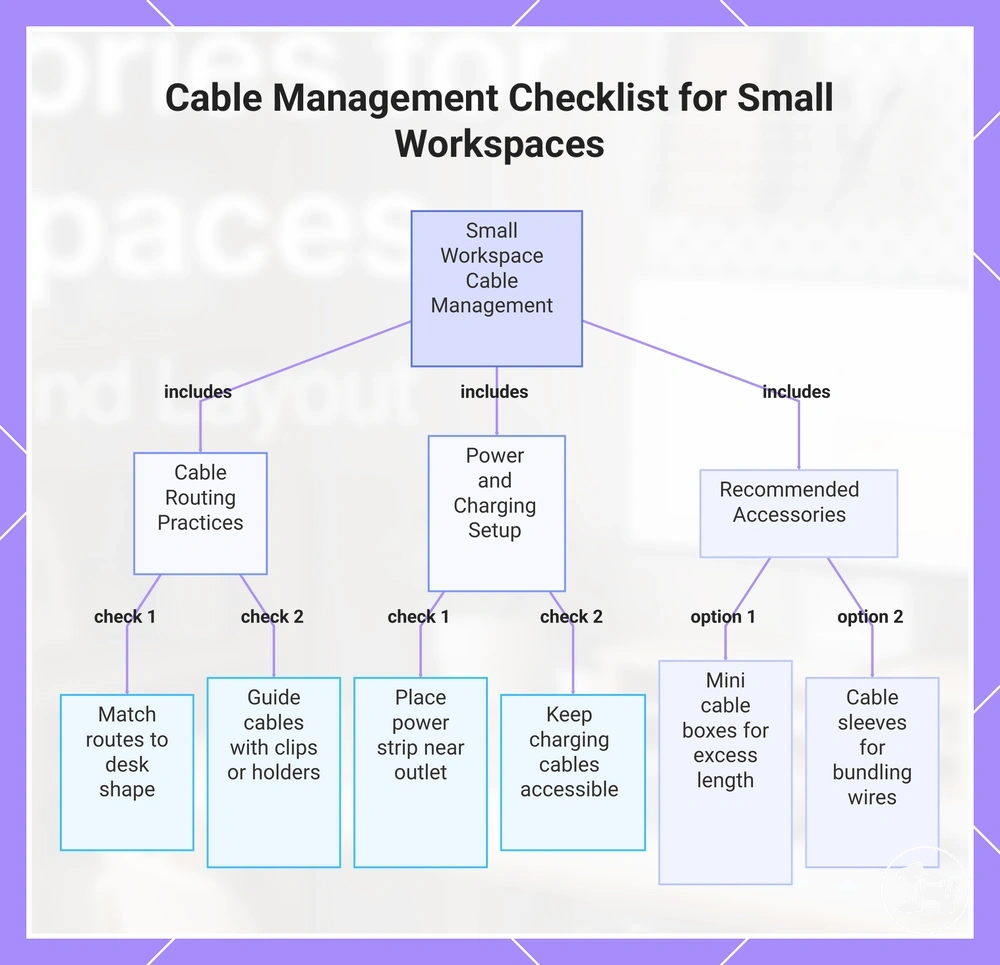
Cable management depends on desk shape, outlet location, and device count in a small workspace. Using cable accessories that match cable routes and access needs can reduce visible clutter, improve organization, and keep frequently used connections within reach.
Mini cable boxes can group excess cable length and power connections in one location. Cable clips and adhesive holders can guide charging cables along desk edges, while cable sleeves can bundle multiple wires into a single route. Power strip placement often works best when it aligns with outlet access and device locations, reducing unnecessary cable crossings across the work area.
A compact checklist for tidy wiring: match cable routes to desk shape, place power strips near available outlets, keep charging cables accessible, use clips or holders to guide cable paths, and bundle related wires when multiple devices share the same area. Cable management is usually most effective when cable length, reach requirements, and device placement are considered together.
This chart shows the main cable management practices and recommended accessories for keeping a small workspace tidy.
Desk Layout and Workflow Optimization
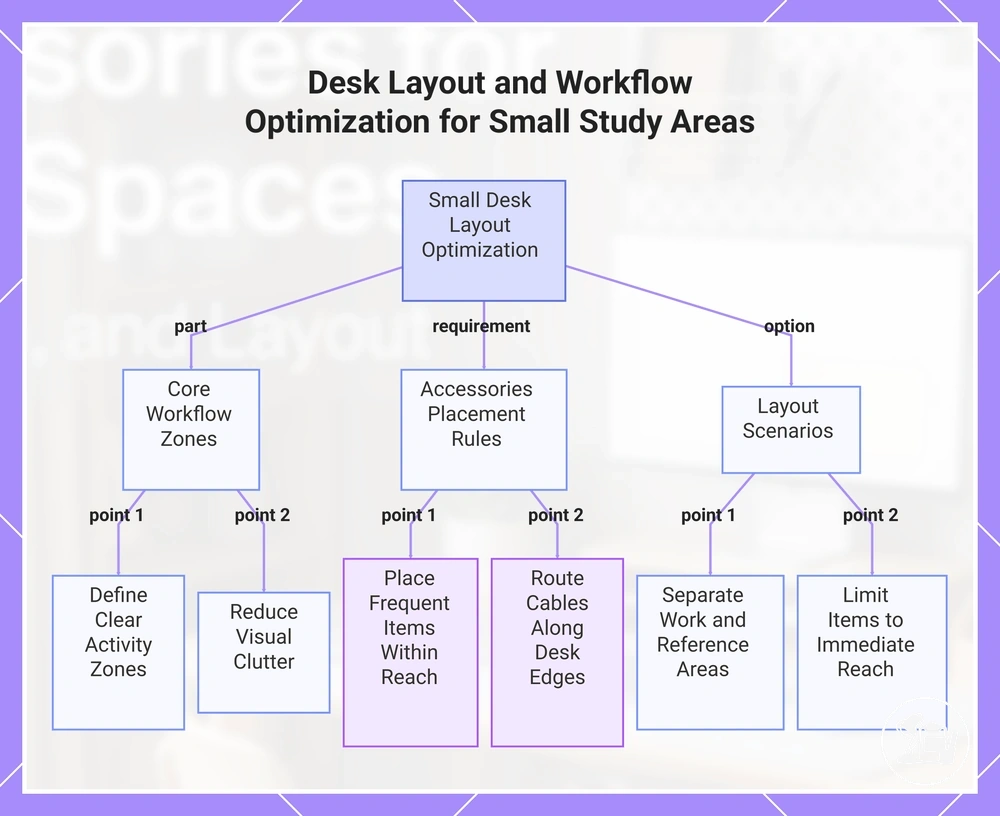
Desk layout for small study areas depends on maintaining clear zones for writing, reading, and device use. Accessory placement should support these active areas while keeping frequently used items within reach and reducing visual clutter, allowing the workflow to remain uninterrupted.
Active surfaces should be reserved for current tasks, while vertical storage can hold materials that are regularly needed but not continuously in use. Lamp positioning should illuminate the task area without obstructing movement, and cable routes should follow desk edges or the rear to keep work zones clear.
Layout scenarios may vary: corner desks can distribute accessories across sides to separate work and reference areas; wall-facing desks may benefit from vertical placement for frequently viewed materials; narrow desks require limiting items to immediate reach zones to preserve workspace.
For readers exploring small setup layout ideas, positioning accessories by zone helps balance accessibility with available desk area.
A simple zone checklist: keep writing areas clear, place frequently used items within reach, position lighting toward active tasks, route cables away from work zones, utilize vertical space when possible, and monitor visual clutter. Following these guidelines supports arranging accessories without clutter while maintaining an efficient study workflow.
This chart shows key principles, accessory placement rules, and layout scenarios for optimizing desk space in small study areas.
Choosing Multi-functional Accessories
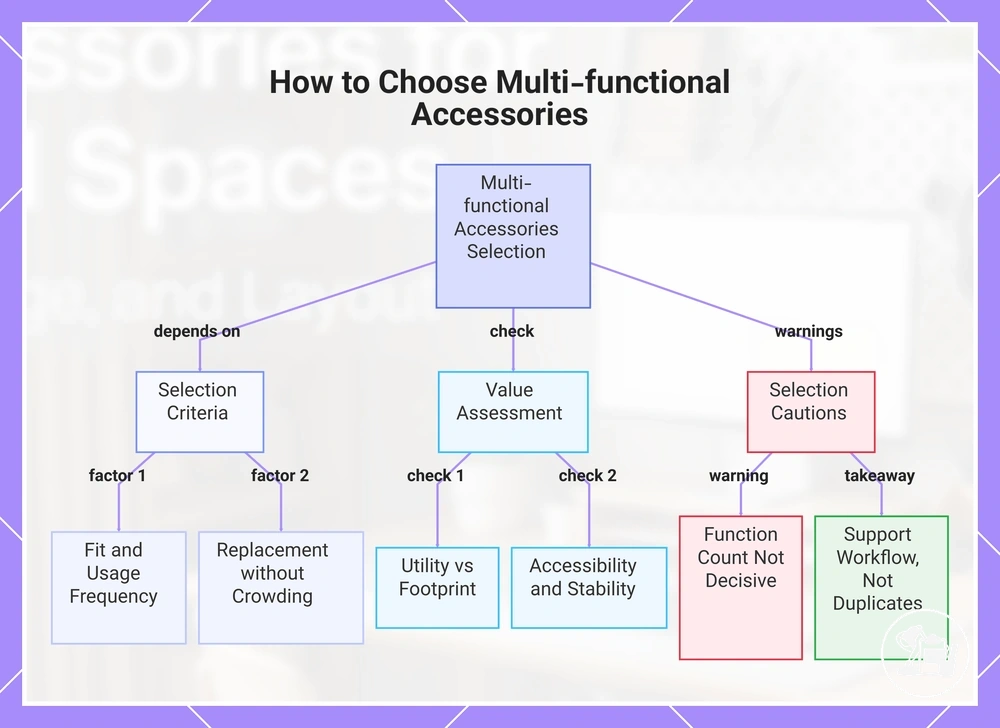
Choosing multi-functional accessories depends on fit, usage frequency, and whether a single item can replace separate accessories without creating crowding. Multi-function value is usually higher when additional functions increase utility while keeping the footprint, accessibility, and stability appropriate for the available desk space.
- Shelf-organizer: Combines storage and organization in one structure. Its suitability depends on whether the added function justifies the space it occupies.
- Lamp-storage combination: Merges lighting with storage features. The trade-off often involves balancing access to stored items with convenient lighting placement.
- Foldable organizer: Provides storage that can adapt to changing needs. Its usefulness may depend on how often items need to be accessed versus stored away.
- Under-desk drawer: Adds storage without using the active work surface. Accessibility can vary based on desk dimensions and user reach.
- Vertical holder: Uses height to support organization while limiting horizontal space use. Effectiveness often depends on stability and visibility of stored items.
Function count alone does not determine suitability. A multi-functional accessory may become less practical if added features increase footprint, reduce stability, or make access less convenient. Selection is often easier when each added function supports the study workflow rather than duplicating existing accessories.
When comparing options, consider whether one accessory can reasonably replace multiple items while maintaining accessibility and space efficiency. Readers exploring budget-friendly compact accessories may also evaluate replacement value alongside footprint and usability trade-offs.
This chart shows the main factors, checks, and warnings for selecting multi-functional accessories for a study desk.
Maintaining Accessibility and Reducing Clutter
Maintaining accessibility on a compact desk depends on keeping frequently used items within easy reach while storing less-used items out of the active workspace. The desk is typically easier to use when reach zones guide placement and visible surfaces are reserved for ongoing tasks rather than overflow storage.
Grouping related items helps minimize unnecessary movement and supports faster access. Reserving visible surfaces for current tasks can reduce distraction, while drawers or other storage containers hold non-essential items when space allows.
Clutter from drawer overflow or unmanaged cable paths can limit accessibility. When storage becomes crowded or cables cross active areas, retrieving items requires more effort and the workspace can feel constrained.
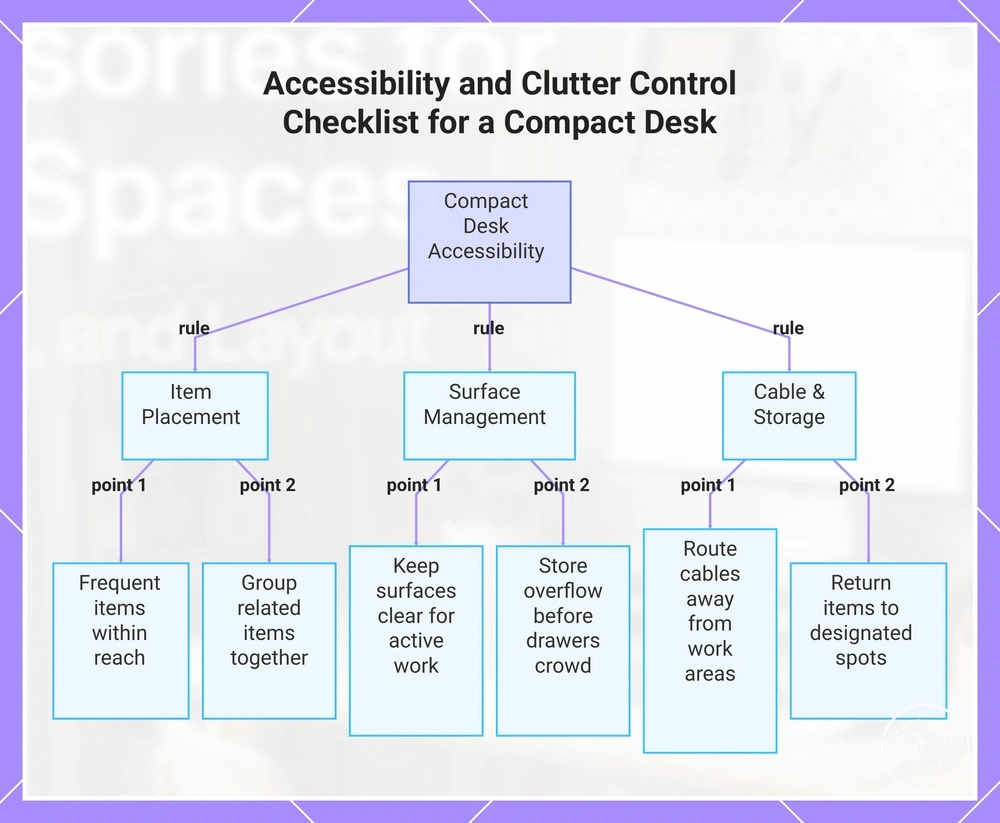
A mini-checklist for accessibility and clutter control:
- Keep frequently used items within comfortable reach.
- Group related items together for easier access.
- Maintain clear surfaces for active work.
- Store overflow items before drawers become crowded.
- Route cables away from primary work areas.
- Return items to designated locations after use to maintain order.
Small adjustments to placement, grouping, and reset habits can help maintain usability and reduce clutter, supporting a functional compact desk setup without crowding the workspace .
This checklist outlines the key actions to keep a compact desk accessible and clutter-free.