Useful vs Unnecessary Study Desk Accessories: What Is Worth Desk Space
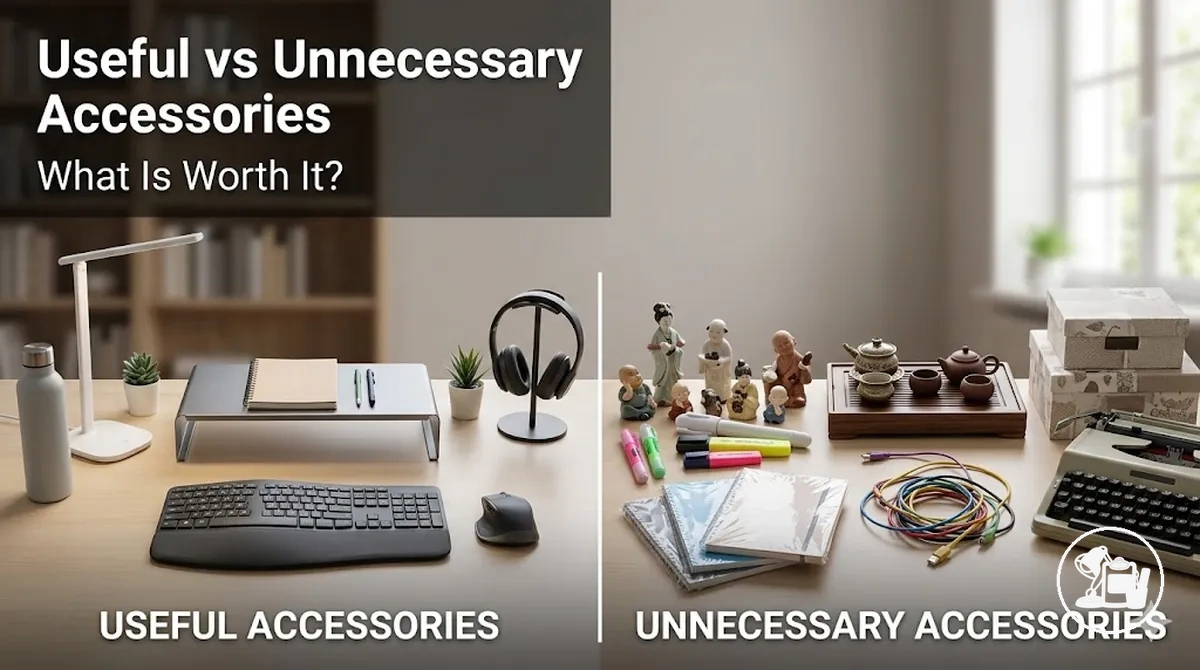
Study desk accessories are worth desk space when they solve repeated study problems and support daily use, while unnecessary accessories often add clutter, duplication, or weak value. The useful versus unnecessary distinction depends on function, frequency, fit, and practical value within a study setup.
Useful accessories help reduce friction during study tasks by improving organization, comfort, lighting, or cable control. When an accessory supports a recurring need, it is more likely to justify the space it occupies. Unnecessary accessories may consume desk space without improving function, making the workspace harder to organize and use effectively. Desk space works best when it supports study function rather than avoidable clutter.
A student with a compact desk may value different study desk accessories than someone with a larger workspace. An organizer, lighting accessory, or cable-control solution can be useful when it addresses a recurring problem, but usefulness may vary based on desk size, study habits, budget, and existing setup. In contrast, accessories with limited use or overlapping functions can reduce available movement area without adding meaningful support. This difference creates a clearer basis for criteria-based comparison.
Useful vs unnecessary study desk accessories can be compared by function, frequency of use, fit within the workspace, and overall value. The comparison below focuses on what is worth desk space rather than personal preference alone.
| Comparison Factor | Useful Accessories | Unnecessary Accessories |
|---|---|---|
| Function | Addresses a repeated study problem | Provides little practical benefit |
| Frequency | Used regularly during study tasks | Used rarely or inconsistently |
| Fit | Supports the study setup without crowding it | Consumes desk space without clear purpose |
| Value | Improves organization, comfort, or usability | Duplicates existing functions or adds clutter |
| Cost Consideration | Offers practical value relative to use | Adds expense without meaningful improvement |
What Makes a Study Desk Accessory Useful or Unnecessary
A useful study desk accessory is an item that improves a recurring study task, reduces friction, or protects usable desk space. Accessories that do not contribute to function or efficiency are considered unnecessary.
Useful accessories are those that actively support study activities, like organizing materials, managing cables, or providing adjustable lighting. The distinction relies on function, frequency of use, and fit within the workspace. Items that occupy space without solving recurring problems generally fall into the unnecessary category.
Appearance alone does not determine an accessory's value. Decorative items can still be acceptable if they do not displace functional needs, as discussed in the study desk setup accessories hub.
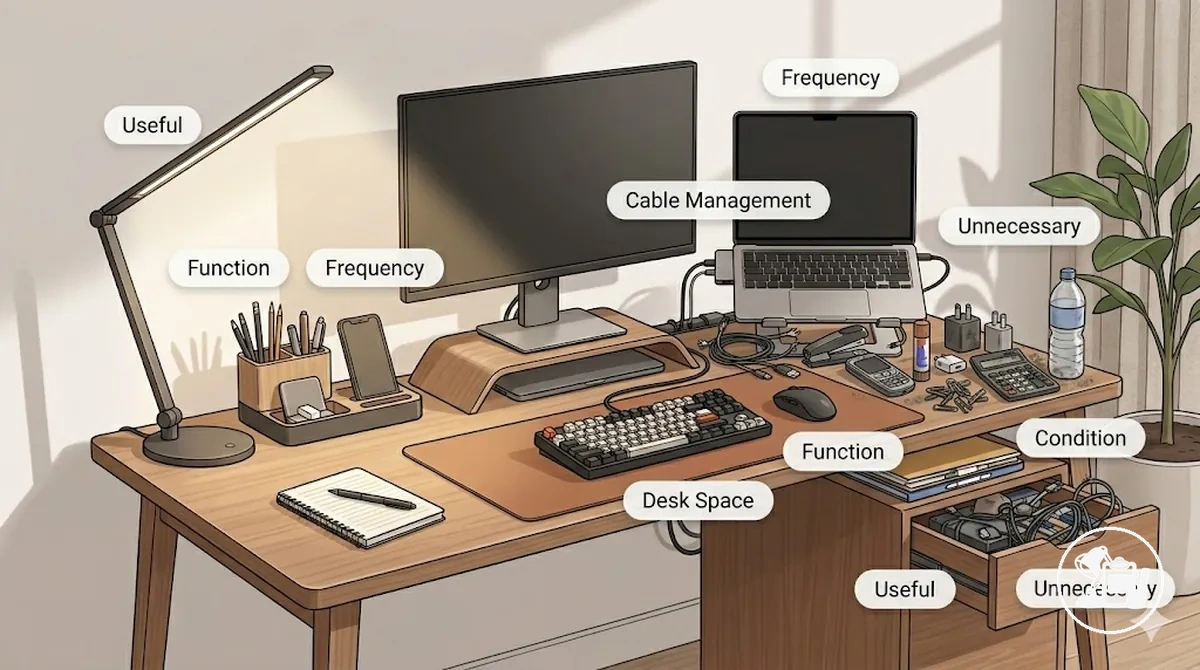
| Accessory signal | Useful when | Unnecessary when | Decision effect |
|---|---|---|---|
| Function | Solves a repeated study task or reduces friction | Offers little practical support or duplicates other tools | Helps determine if the accessory adds meaningful value |
| Frequency | Used regularly during study sessions | Used rarely or inconsistently | Guides prioritization of desk space allocation |
| Desk fit | Integrates without crowding usable space | Consumes space unnecessarily | Assesses spatial suitability and workflow impact |
| Condition | Supports comfort, organization, or task efficiency | Clutters or obstructs the desk environment | Informs the decision outcome regarding retention |
Useful Accessories That Solve Real Desk Problems
Useful study desk accessories address recurring desk problems that create friction and hinder workflow efficiency. They provide practical solutions that make daily study tasks smoother and maintain usable desk space.
Imagine a scenario where a cluttered desk slows down study sessions. Functional organizers, cable management tools, proper lighting, and comfort aids streamline the workspace, making repeated tasks easier and reducing friction. The following bullet points illustrate common problem-solution relationships for desk accessories.
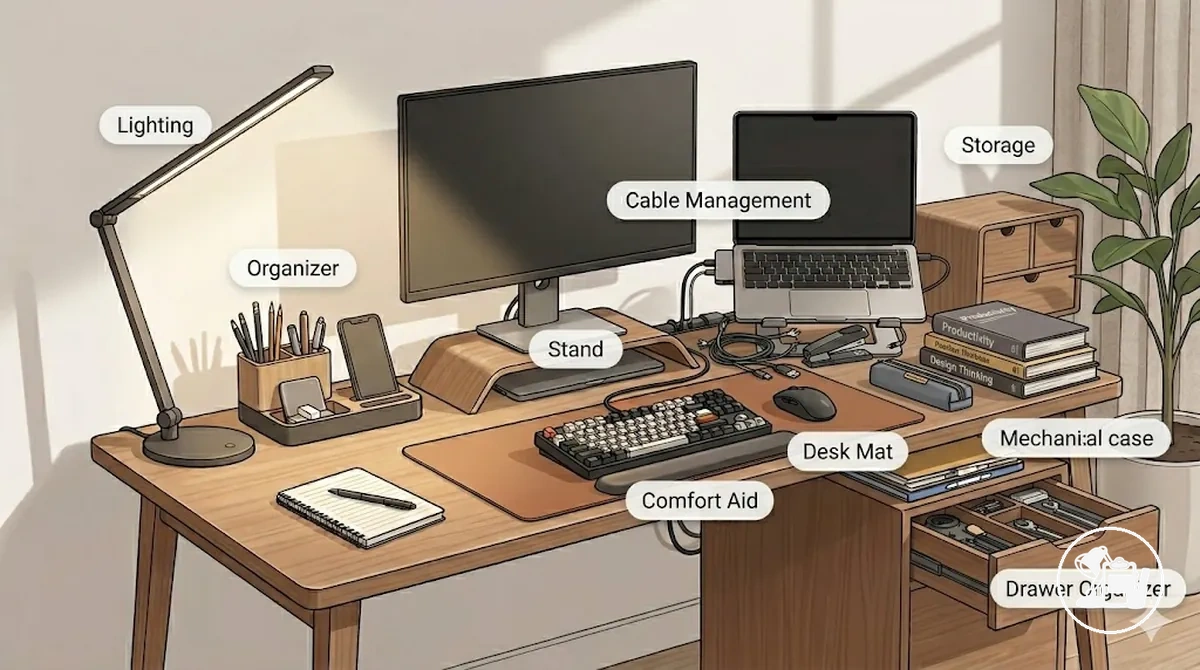
- Organizer: Groups supplies, reduces clutter, improves access, practical effect: streamlined workflow
- Cable control: Manages wires, keeps desk surface clear, practical effect: prevents tangling and obstruction
- Lighting: Provides adjustable illumination, supports reading and device use, practical effect: eye comfort and focus
- Storage: Stores books and materials, frees up workspace, practical effect: keeps desk tidy and accessible
- Desk mat: Protects surface, stabilizes writing area, practical effect: smooth and organized study space
- Stand: Elevates laptop or monitor, supports posture, practical effect: ergonomic comfort and better device use
- Comfort aid: Cushions or wrist support, reduces strain, practical effect: sustained comfort during long study sessions
Organization, Storage, and Cable Control Accessories
Organization, storage, and cable control accessories address desk clutter and improve access. They resolve local friction points, helping keep study areas tidy and functional.
On small desks, shared desks, or device-heavy setups, clutter can slow work. Compact organizers, trays, storage units, and cable management tools clear surfaces and maintain order. Each accessory removes a specific friction for smoother workflow.
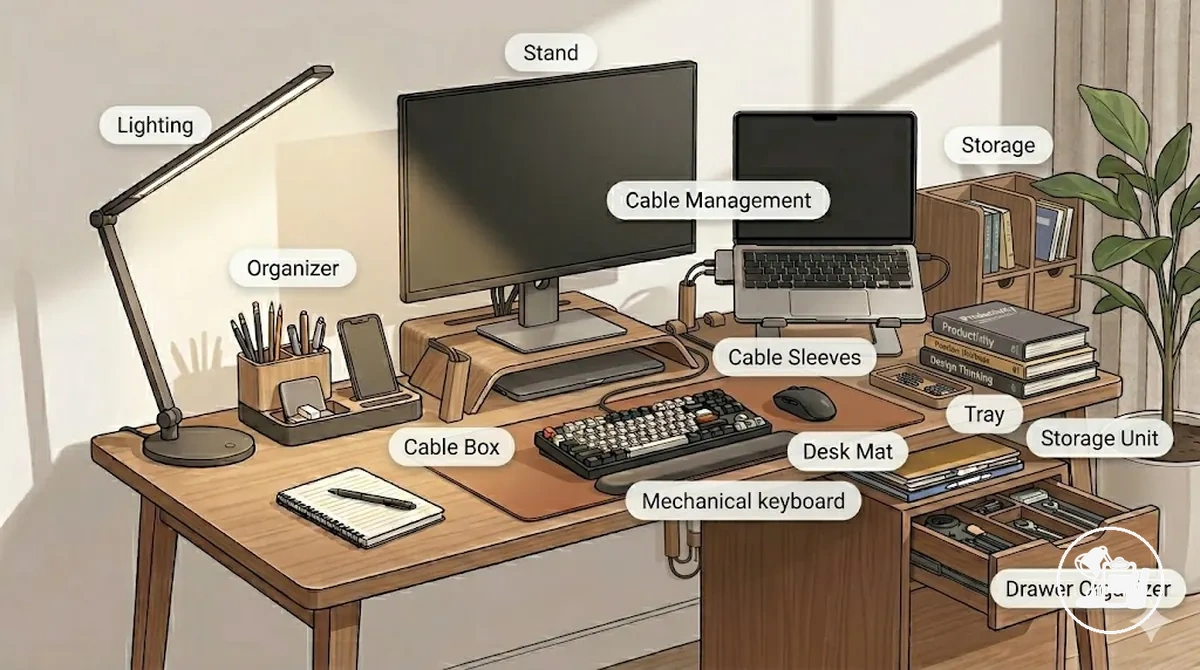
- Organizer/Tray: Groups supplies, reduces clutter, desk outcome: streamlined access
- Storage unit: Holds books and materials, maintains surface space, desk outcome: accessible workspace
- Cable clips: Separates wires, prevents tangling, desk outcome: cleaner, safer desk
- Cable box: Consolidates cords, limits surface mess, desk outcome: organized cable area
- Cable sleeves: Bundles cables, improves routing, desk outcome: tidy desk surface
Lighting, Posture, and Comfort Accessories
Lighting, posture, and comfort accessories support study conditions by improving visibility, device positioning, and seating comfort, depending on desk fit and study duration. Their usefulness varies with placement and adjustability to avoid crowding the workspace.
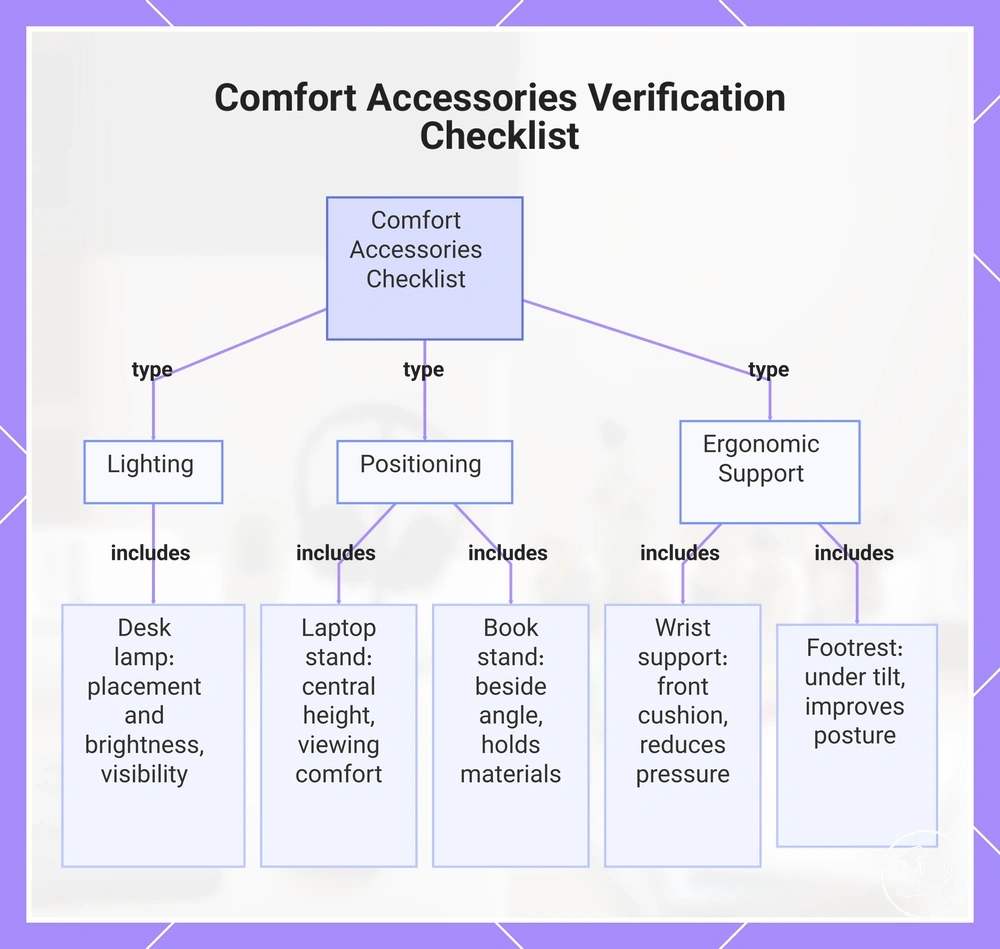
For long sessions, evening reading, or laptop-based study, desk lamps, stands, wrist supports, footrests, and book stands can enhance comfort and usability. The mini-checklist below verifies each accessory’s placement, adjustability, and suitability for study duration.
- Desk lamp: Placement near reading area, Adjustability of brightness and angle, Benefit: supports visibility, Limitation: may glare if misaligned
- Laptop stand: Central placement, Adjustable height, Benefit: aids viewing comfort, Limitation: requires stable surface
- Wrist support: Front of keyboard, Soft cushion, Benefit: reduces pressure during typing, Limitation: may shift if lightweight
- Footrest: Under desk, Tilt/height adjustable, Benefit: improves seated posture, Limitation: limited effect if chair height unsuitable
- Book stand: Beside laptop or reading area, Adjustable angle, Benefit: holds materials at readable height, Limitation: occupies desk space
This chart shows the key verification points for each comfort accessory, including placement, adjustability, and main benefit, grouped by lighting, positioning, and ergonomic support.
Unnecessary Accessories That Add Clutter Without Enough Benefit
Unnecessary accessories depend on their utility relative to the space and attention they consume. Items that occupy desk area without providing meaningful benefit increase clutter, maintenance, or distraction more than they support study tasks.
The comparison below distinguishes low-value accessories from optional items that may still suit particular users. This contrast helps identify when novelty items, duplicate organizers, oversized décor, unstable stands, excessive lighting, or rarely used single-purpose tools may hinder desk efficiency versus when they remain acceptable.
| Item Type | Weak Attribute | Use Condition | Risk / Wasted Space |
|---|---|---|---|
| Novelty item | Low practical benefit | Occasional use | Distraction, consumes desk space |
| Duplicate organizer | Redundant function | Overlapping supplies | Wasted surface, adds clutter |
| Oversized décor | Large footprint | Desk crowding | Limits movement and usable area |
| Unstable stand | Poor stability | Support for devices or books | May tip, occupies space without benefit |
| Excessive lighting | Overlaps work area | Multiple lamps | Clutter, may distract |
| Rarely used single-purpose tool | Limited function | Seldom needed | Consumes desk area without meaningful impact |
While some optional items can fit individual preferences or specific setups, weighing their space cost against their practical utility ensures the desk remains functional and organized, keeping low-value purchases distinct from acceptable optional accessories.
Decorative, Novelty, and Duplicate Accessories
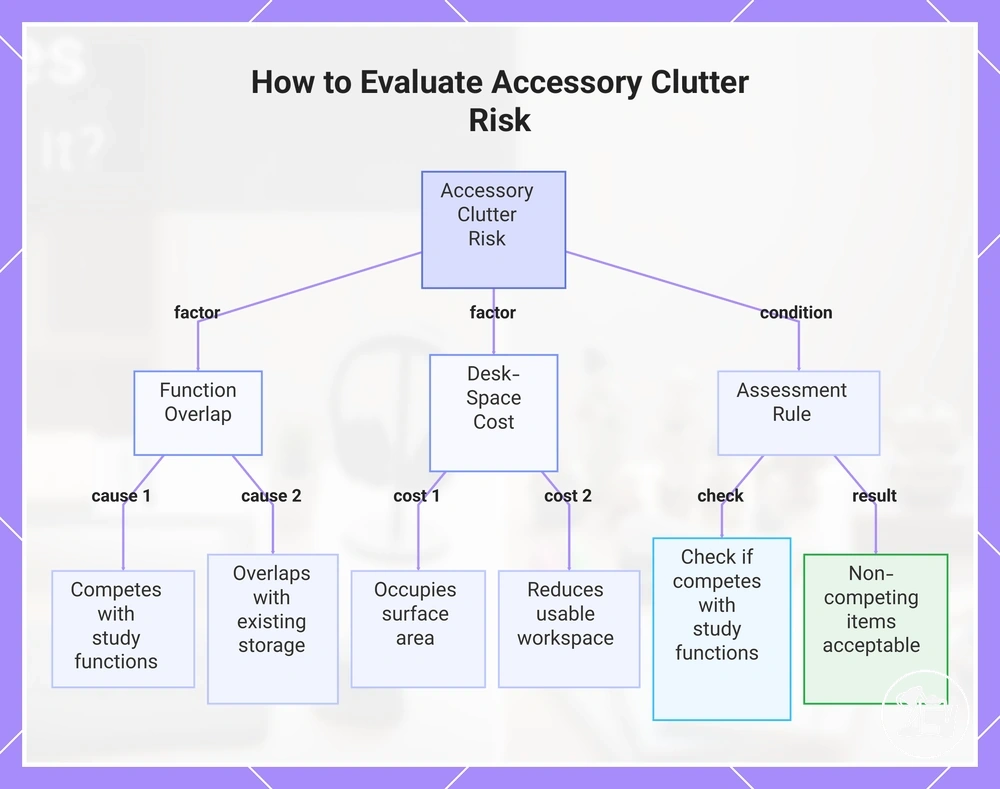
A decorative accessory, novelty accessory, or duplicate accessory may have weak value when it adds desk-space cost without supporting a real task. The common myth is that all decorative items are unnecessary, but the more accurate view is that usefulness depends on whether the item competes with study functions. Decoration becomes a problem only when it displaces function.
The bullets below compare accessory types through function overlap and desk-space cost while keeping personal style separate from utility decisions. The focus is on function overlap and desk-space cost.
- Figurine: Decorative accessory, occupies surface space, when placed in a crowded study area, clutter effect: may add visual clutter
- Extra pen cup: Duplicate accessory, overlaps existing storage, when supplies are already organized, clutter effect: adds redundancy
- Novelty lamp: Novelty accessory, appearance may outweigh lighting value, when primary lighting already exists, clutter effect: may distract or crowd the workspace
- Duplicate tray: Duplicate accessory, function overlap with another tray, when holding the same supplies, clutter effect: reduces usable desk space
- Themed item: Decorative accessory, supports personal style, when it does not compete with core study functions, clutter effect: often limited and may remain acceptable
This chart shows how decorative, novelty, and duplicate accessories create clutter based on function overlap and desk-space cost.
Oversized or Single-Purpose Accessories
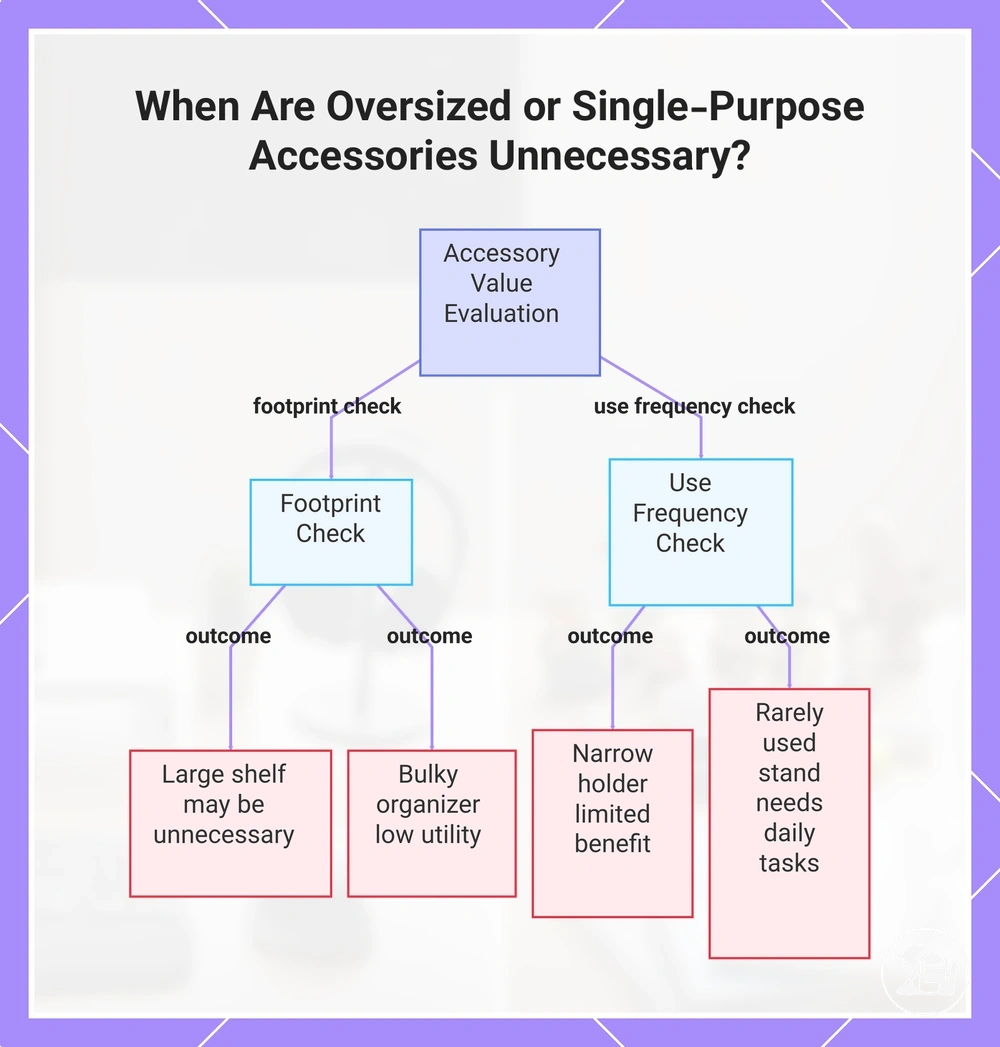
Oversized accessories and single-purpose accessories can become unnecessary when poor fit or low use frequency reduces their value. Items such as large shelves, bulky organizers, oversized mats, narrow-purpose holders, or rarely used stands may otherwise be useful but turn low-value if they occupy excessive desk space or are seldom used.
The following fit-check mini-list evaluates footprint and use frequency before judging value, emphasizing that fit should be considered prior to personal preference.
- Large shelf: Footprint may crowd movement area; if it limits workspace, decision outcome: may be unnecessary.
- Bulky organizer: Surface space vs. storage needs; if a simpler option suffices, decision outcome: low utility.
- Oversized mat: Supports writing or mouse area; if it extends beyond practical use, decision outcome: reduced value.
- Narrow-purpose holder: Use frequency matters; if rarely used, decision outcome: limited benefit.
- Rarely used stand: Justified only with daily repeated tasks; otherwise, footprint may outweigh utility.
Occasionally, a single-purpose accessory is warranted when it supports a daily task, such as a specialized stand used repeatedly, which can justify its presence despite a larger footprint .
This chart evaluates oversized or single-purpose accessories using footprint and use frequency criteria to determine if they are unnecessary.
Worth-It Criteria for Essential vs Optional Accessories
An accessory is worth it when it solves a repeated study problem, fits the desk, and provides more practical value than simpler or cheaper alternatives. Following these worth-it criteria allows students to categorize items as essential accessories, optional accessories, or avoidable accessories effectively.
The table below organizes essential versus optional decisions using evidence of use, showing accessory, criterion, threshold condition, and the resulting decision to buy, delay, or avoid. This structure highlights which items merit attention based on actual desk use.
| Accessory | Criterion | Threshold Condition | Decision |
|---|---|---|---|
| Desk organizer | Frequency & Function | Used daily to manage multiple items | Buy (essential accessory) |
| Adjustable lamp | Footprint & Adjustability | Fits desk and supports task lighting | Buy (essential accessory) |
| Cable management kit | Function & Frequency | Used regularly to reduce clutter | Buy (essential accessory) |
| Extra decorative item | Function overlap & Footprint | Used occasionally, adds minimal practical benefit | Delay or optional accessory |
| Rarely used single-purpose holder | Use frequency | Supports a task seldom performed | Avoidable accessory |
Frequency, footprint, and function are the highest-priority criteria. Accessories with consistent daily use and appropriate desk fit often justify purchase, while those with low use frequency or overlapping function may be delayed or avoided. Secondary factors such as durability, adjustability, and cost can influence longer-term value.
For students with small desks, multiple devices, or limited budgets, weighing these priority signals is crucial. A compact organizer used daily remains essential, while an oversized decorative tray may be optional or avoidable depending on fit and repeated use. For deeper procedural guidance, see buying checks before choosing:contentReference[oaicite:0]{index=0}.
Daily Use Frequency and Study Task Support
Daily use frequency and study task support help determine the relative priority of an accessory. Accessories that aid recurring study tasks generally justify higher attention, while those used for occasional convenience typically remain optional. Repeated tasks raise the accessory’s priority and influence the worth-it decision.
The mini-checklist below separates recurring tasks from occasional convenience. Each item pairs a common study task with the accessory function, frequency condition, and priority effect to verify how use frequency affects accessory relevance. :contentReference[oaicite:0]{index=0}
- Reading: Book stands or task lighting support frequent reading sessions; repeated use may raise priority.
- Writing: Writing tools that organize and improve access can support daily note-taking; frequent use often justifies inclusion.
- Charging: Cable management or charging stations facilitate device use; repeated charging tasks can increase priority.
- Laptop use: Stands or risers improve repeated laptop tasks; recurring use may warrant keeping the accessory accessible.
- Stationery access: Organizers that maintain supply accessibility support recurring tasks; frequent access can justify higher priority.
- Long study sessions: Comfort aids or wrist supports assist extended study; occasional use may remain optional.
Desk-Space Footprint and Setup Fit
Desk-space footprint and setup fit influence how effectively an accessory functions within a study setup. An accessory that fits well on one desk may crowd or limit movement area on another, so fit can change its relative value. Considering desk conditions helps determine the decision outcome for each accessory.
The compact checklist below tests whether the same accessory remains useful under varying desk conditions. Each check links a desk condition to accessory fit, space effect, and decision outcome, highlighting conditional compatibility. :contentReference[oaicite:0]{index=0}
- Desk size: When an accessory fits without limiting movement area, setup fit remains favorable; if it occupies too much surface, the decision outcome may shift toward delay or avoidance.
- Vertical clearance: Shelves or lamps that fit beneath available clearance support the setup; restricted clearance may reduce compatibility.
- Storage availability: Accessories that complement existing storage can improve organization; if storage is already sufficient, footprint may limit utility.
- Cable paths: When cables remain accessible and organized, cable-management tools fit well; blocked or tangled paths can lower the decision outcome.
- Lamp position: Proper lamp placement avoids obstructing workspace; poor positioning can reduce accessory value.
- Movement area: Accessories that preserve comfortable reach and workflow maintain positive decision outcomes; reduced movement area may favor optional or avoidable status.
As a boundary example, a compact desk may require smaller accessories to preserve workspace, while a wider desk may accommodate larger items without affecting movement area. Fit and desk condition determine the accessory’s usefulness rather than any universal measurement rule.
Durability, Adjustability, and Replacement Value
Durability, adjustability, and replacement value help evaluate whether an accessory maintains long-term usefulness. Strong material quality, a stable base, and functional adjustment features can support extended use, while weaker components may increase replacement frequency. Long-term value depends on usage patterns and replacement risk.
The following bullet points compare weak and strong value signals, focusing on attributes, conditions, risk, and potential benefit. Each item highlights how durability, adjustability, and replacement considerations influence the accessory’s usefulness. :contentReference[oaicite:0]{index=0}
- Material quality: Higher-quality materials can improve wear resistance and reduce replacement risk, while lower-quality materials may degrade faster and lower long-term value.
- Stable base: A stable base supports desk use and minimizes wobble; instability can limit usefulness and increase replacement likelihood.
- Adjustable arms: Accessories with adjustable arms can adapt to different setups and tasks, while limited adjustability may reduce fit and functionality.
- Washable surfaces: Easily cleanable surfaces support maintenance and durability, whereas surfaces that are hard to clean may show wear sooner.
- Cable grip strength: Strong cable grips maintain organization and reduce stress on wires, while weak grips may compromise usability and increase replacement frequency.
- Replacement frequency: Lower replacement frequency improves long-term value; a slightly higher-cost accessory may be reasonable when it reduces the need for repeated replacement.
Functional vs Minimal Accessories in a Practical Study Setup
Functional accessories and minimal accessories are compared based on how a practical study setup balances support needs with item reduction. Minimal and functional choices can overlap when each item contributes clear utility, allowing a simpler setup without losing essential support.
The comparison block below highlights differences between functional and minimal accessories, focusing on support needs versus fewer items, cleaner surfaces, and multi-use choices. It shows how a practical study setup can prioritize essential tools while reducing extras. :contentReference[oaicite:0]{index=0}
| Setup Choice | What It Keeps | What It Removes | Best Condition |
|---|---|---|---|
| Functional organizers | Accessible supplies and task support | Loose desk clutter | When study materials are used frequently |
| Minimal organizers | Essential items only | Extra storage accessories | When fewer supplies are needed daily |
| Task lamp | Focused lighting support | Unnecessary lighting overlap | When reading or screen use is common |
| Cable control | Organized device setup | Visible wire clutter | When multiple devices share the desk |
| Comfort aids | Support for longer sessions | Non-essential extras | When study duration increases |
| Multi-use choices | Combined functions in fewer items | Single-purpose accessories | When desk space is limited |
For example, a student using only a notebook, a laptop, and a few supplies may achieve sufficient support with minimal accessories and a cleaner surface. When additional tasks, multiple devices, or longer study sessions are involved, functional accessories such as cable control, storage, and comfort aids can be justified. For a detailed comparison, see minimalist accessory decisions to align support needs with item reduction.
Price-to-Value Checks Before Adding Another Accessory
Price-to-value checks compare an accessory’s cost with its repeated benefit, fit, and avoided clutter. Before adding another item, confirm that it supports a recurring study task and does not duplicate a simpler solution. Price matters only after value conditions are clear.
The table below compares accessory cost against frequency of use, quality signals, replacement risk, space saving, and alternative solutions. The outcome depends on repeated benefit, fit, and avoided clutter.
| Accessory Attribute | Value Condition | Outcome |
|---|---|---|
| Accessory cost | Reasonable relative to repeated benefit | Buy if justified, wait if marginal, skip if excessive |
| Frequency of use | Used regularly for study tasks | Buy if frequent, wait if occasional, skip if rare |
| Quality signals | Material, stability, and adjustability support repeated use | Buy if strong, wait if unclear, skip if weak |
| Replacement risk | Lower wear or lower replacement frequency | Buy if risk is low, wait if uncertain, skip if fragile |
| Space saving | Reduces clutter or combines functions | Buy if space-efficient, wait if marginal, skip if redundant |
| Alternative solutions | A simpler item can provide similar support | Buy if unique, wait if overlapping, skip if duplicate |
Cost and replacement risk should be judged together because a cheaper accessory may become less useful if it needs frequent replacement. A slightly higher-cost option may be reasonable when stronger quality signals reduce repeated replacement risk. This does not require a merchant-style price claim; it only compares value condition against likely use.
For a budget-constrained student, a daily-use organizer or cable solution may come before a decorative or rarely used accessory. In that situation, budget and value choices should favor repeated benefit, desk fit, and reduced clutter over extra items.
When the benefit remains occasional, the fit is uncertain, or a simpler alternative already works, waiting or skipping is often the safer value decision.
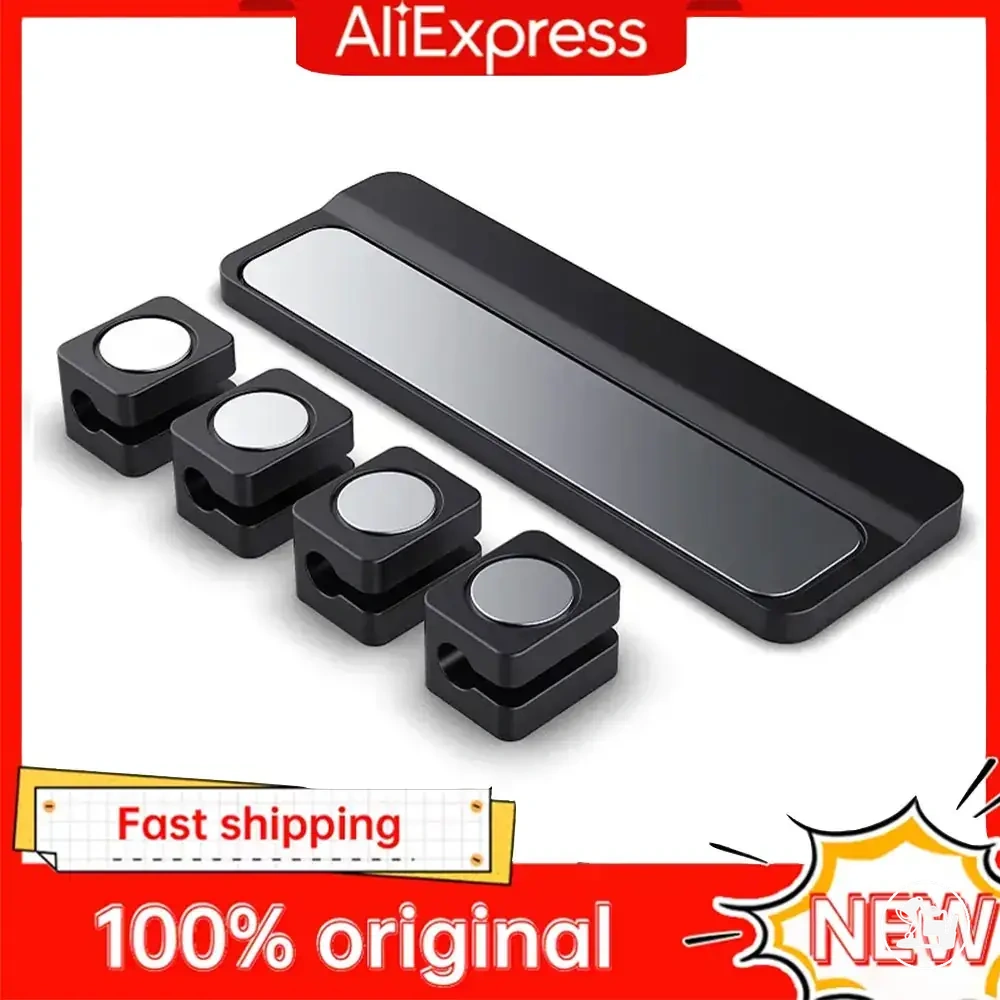
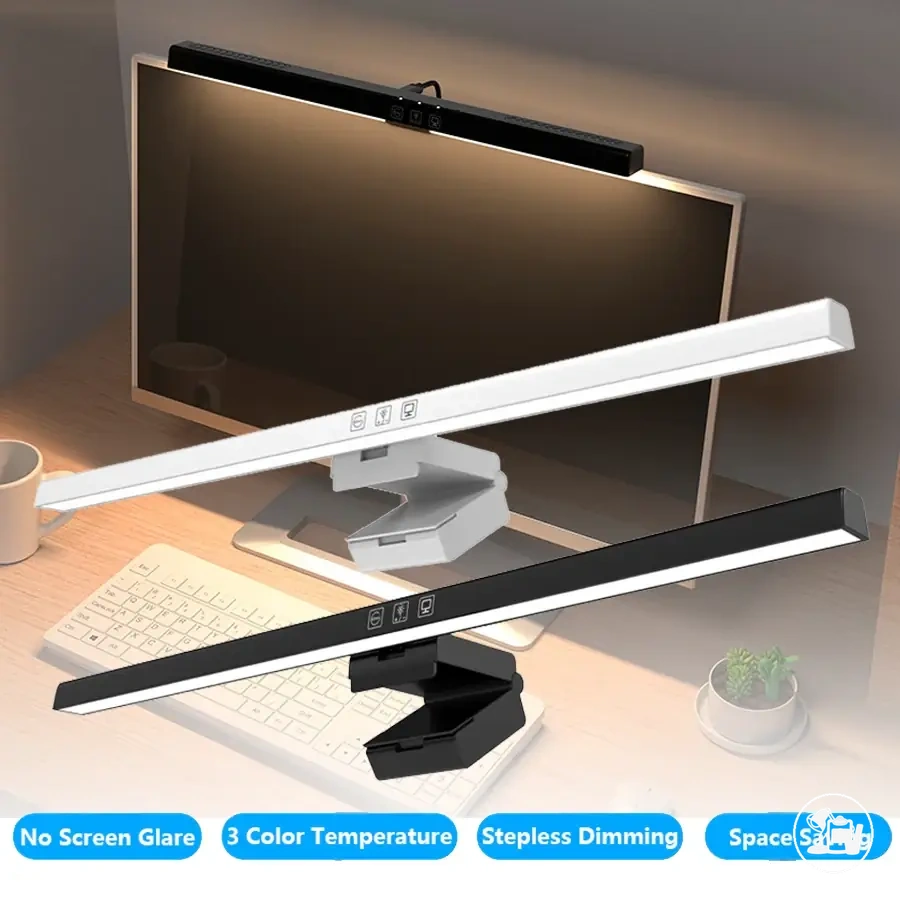
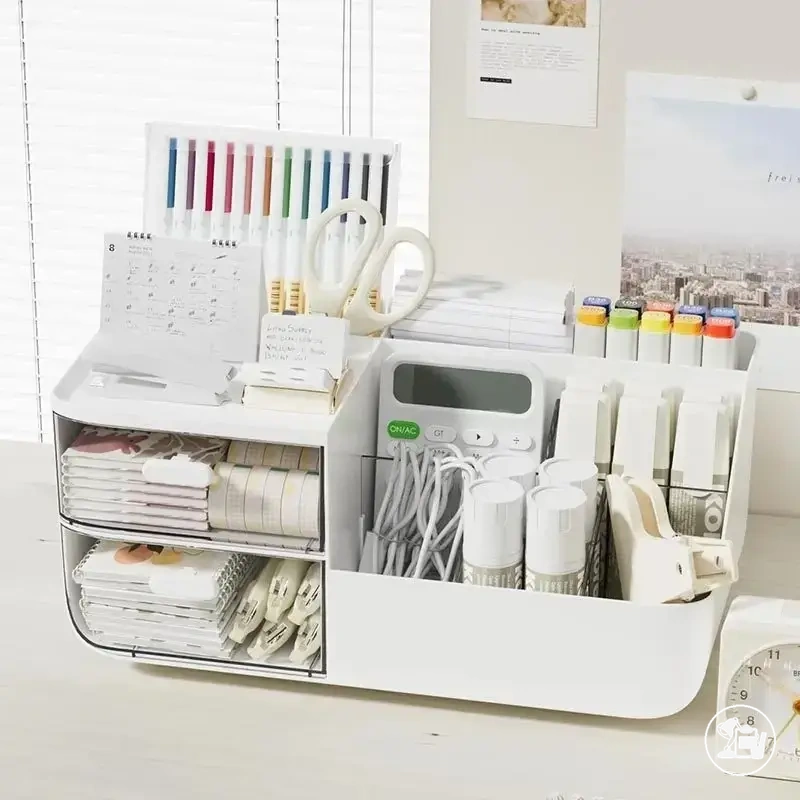
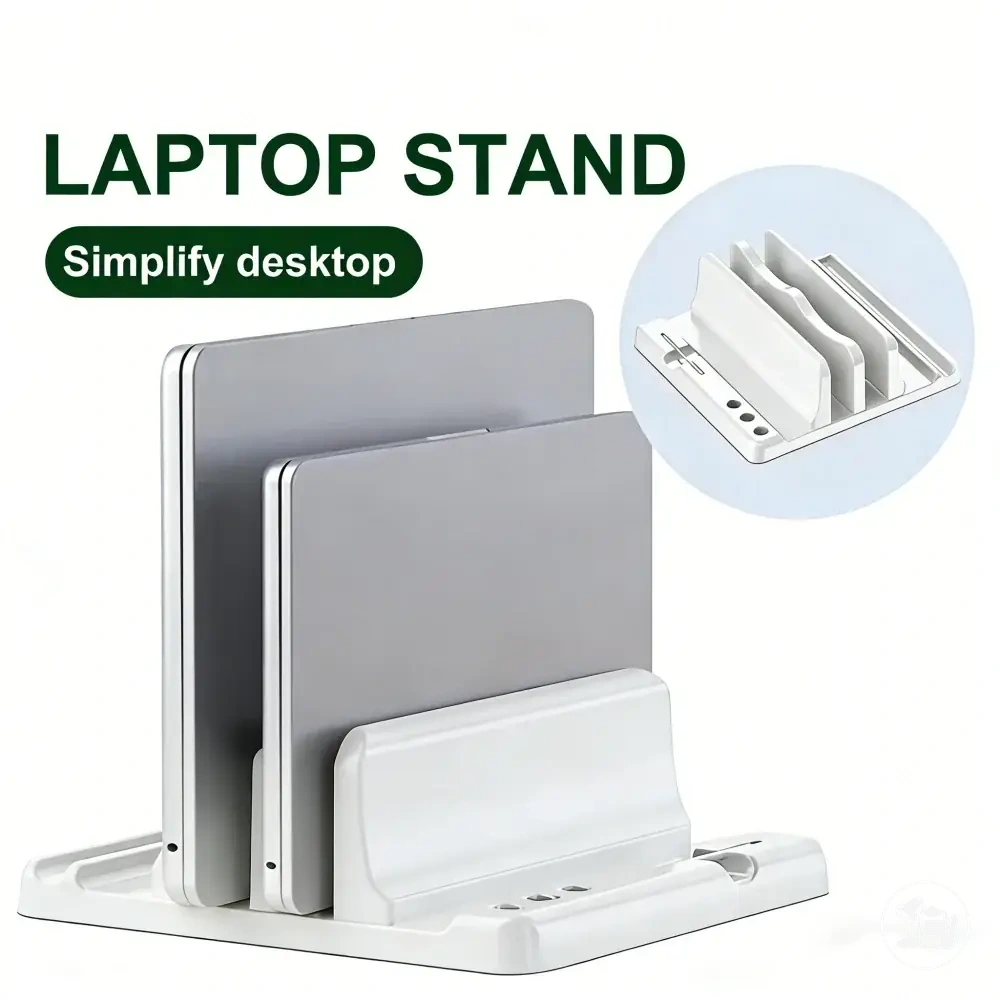
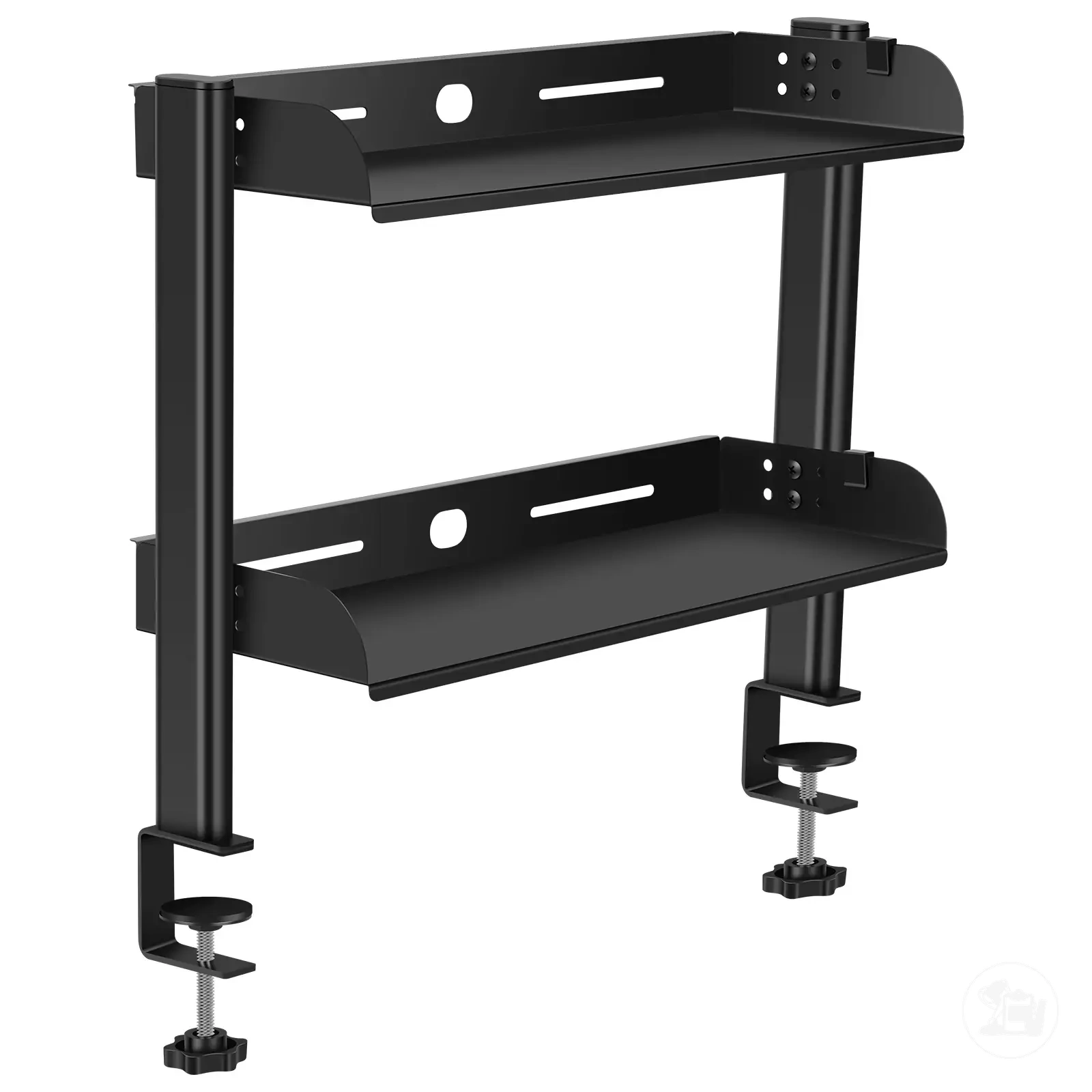
The products below are useful examples for comparing available options. Before buying, check that the compatibility criteria, key features, and product details match your needs.
Accessories to Prioritize, Delay, or Avoid
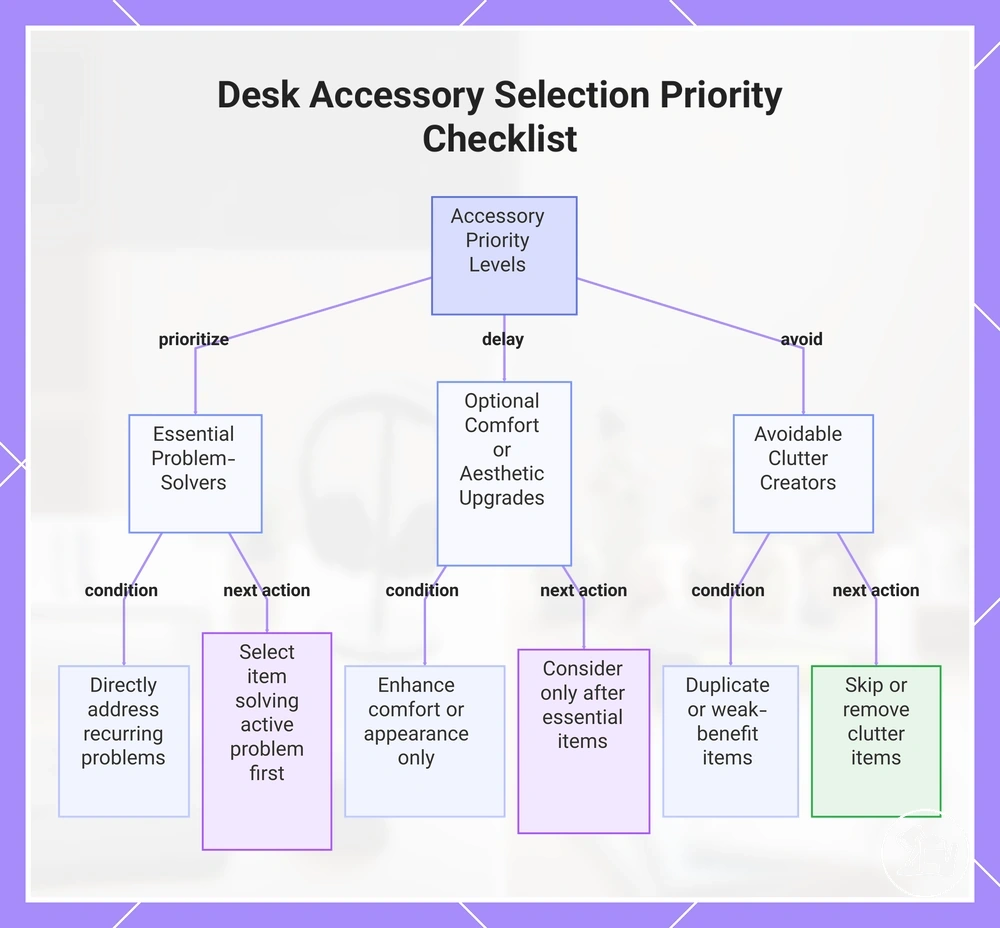
Accessories should be selected based on current desk problems, prioritizing those that solve recurring issues first. Priority is determined by which items most effectively address friction points, organization gaps, or comfort needs, rather than following a fixed shopping order.
The three-part checklist below organizes accessories by group, decision status, condition, and next action. The decision statuses are prioritize, delay, and avoid, which help guide effective allocation of desk space and attention. :contentReference[oaicite:0]{index=0}
- Essential problem-solvers: Prioritize items that directly address recurring problems, such as inadequate lighting, cable mess, or difficult stationery access; next action: select the item that solves the active problem first.
- Optional comfort or aesthetic upgrades: Delay items that enhance comfort or appearance but do not fix immediate functional issues; next action: consider only after essential problem-solvers are addressed.
- Avoidable clutter creators: Avoid items that duplicate existing accessories, consume desk space unnecessarily, or provide weak practical benefit; next action: skip or remove items that increase clutter without improving usability.
Essential problem-solvers are usually added first because they reduce repeated friction. For instance, a cable control solution may be prioritized if frequent device charging creates desk interference, while a compact organizer may help when stationery access is inefficient. The actual selection depends on which problem is most impactful.
Optional or delayed items should be assessed based on current setup sufficiency. A decorative piece, comfort upgrade, or additional tray can be acceptable if it does not compete with functional desk space. Refer to the priority checklist to differentiate delayed accessories from essential ones.
For example, when deciding between a cable clip for daily device charging and a novelty lamp mainly for appearance, the cable clip may take priority due to functional benefit. Applying buying checks before choosing ensures that decisions consider fit, frequency, and actual task support.
The products below are useful examples for comparing available options. Before buying, check that the compatibility criteria, key features, and product details match your needs.
This chart shows the three decision statuses for desk accessories—prioritize, delay, and avoid—with their conditions and recommended next actions.
FAQ About Study Desk Accessories Worth Buying
Should I buy desk accessories if I have a small desk?
Yes, desk accessories can be worth buying on a small desk when they solve a repeated problem or improve organization. Useful accessories should fit the available space and support daily study tasks. If desk-space limits are tight, prioritize compact items with clear value.
Is a decorative desk accessory unnecessary?
A decorative desk accessory is not always an unnecessary accessory. An optional accessory can be reasonable when it does not reduce workspace or interfere with a study task. If decoration creates clutter or replaces a useful item, it may be better to skip it.
What desk accessories are usually worth buying first?
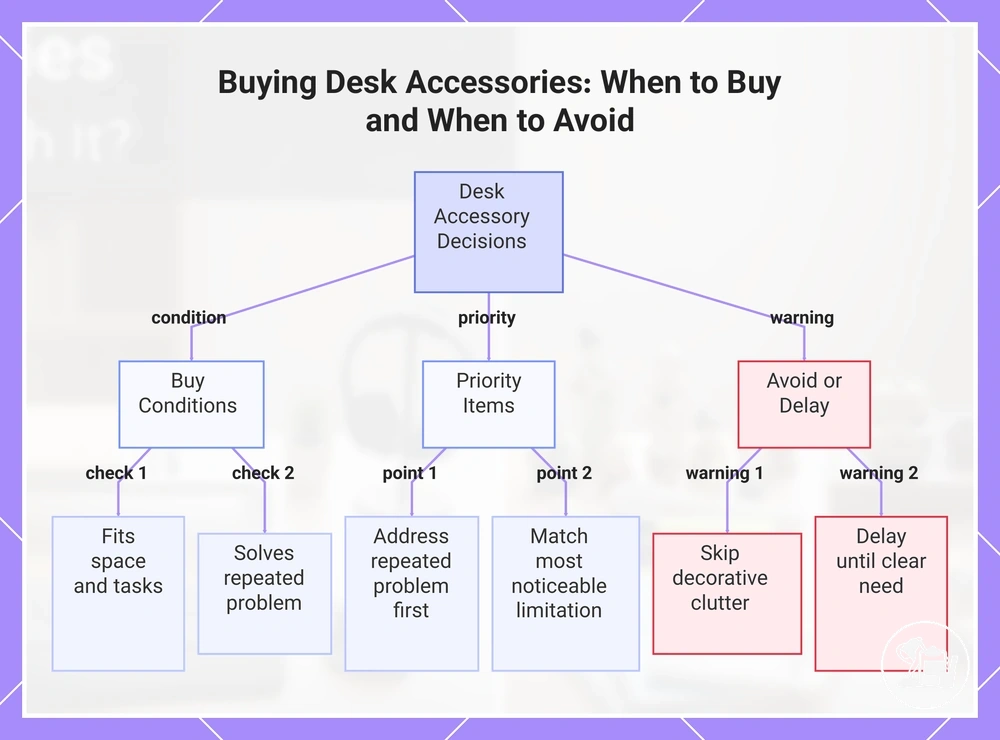
Useful accessories that address a repeated problem are usually worth buying first. Examples may include items that improve lighting, organization, or cable control when those issues affect daily use. Priority should match the most noticeable limitation in the current setup.
When should I delay buying another accessory?
Delay buying another accessory when the current setup already supports essential study tasks. Budget timing, limited use, or uncertain value are common reasons to wait. A delay is often reasonable until a clear need appears.
Can a minimal study desk still be functional?
Yes, a minimal setup can still support study needs effectively. A simple setup may provide a clean surface, essential tools, and enough function without adding extra accessories. The decision depends on support needs rather than item count.
What unnecessary accessories should I avoid?
Unnecessary accessories often include duplicate items, clutter creators, or products with weak practical benefit. An accessory that overlaps with an existing function may add little value. If the item does not solve a problem or support a study task, skipping it can be reasonable.
Can budget timing change accessory priority?
Yes, budget timing can change priority decisions. An accessory that is useful may still be delayed when a higher-priority need requires attention first. Focus on current value and repeated use before adding optional accessories.
This chart shows the key conditions for buying desk accessories, what to prioritize first, and when to avoid or delay a purchase.